-
Time (Will your pet cope with the travel noise, distance, cage, strangers, and being in close proximity to other animals?)
-
Cost (Travelling by plane is more expensive but quicker than by road).
-
Care (will your pet receive personalised care during their trip?)
-
Insurance (if something happens to your pet, is the company insured, and for what in particular?)
-
Communication (do they stay in contact with you, even during the journey?)
-
Air Conditioned/Heated Transport
-
Do they follow and practise sound Safety Procudures
-
Quarantine Periods for International Transport
-
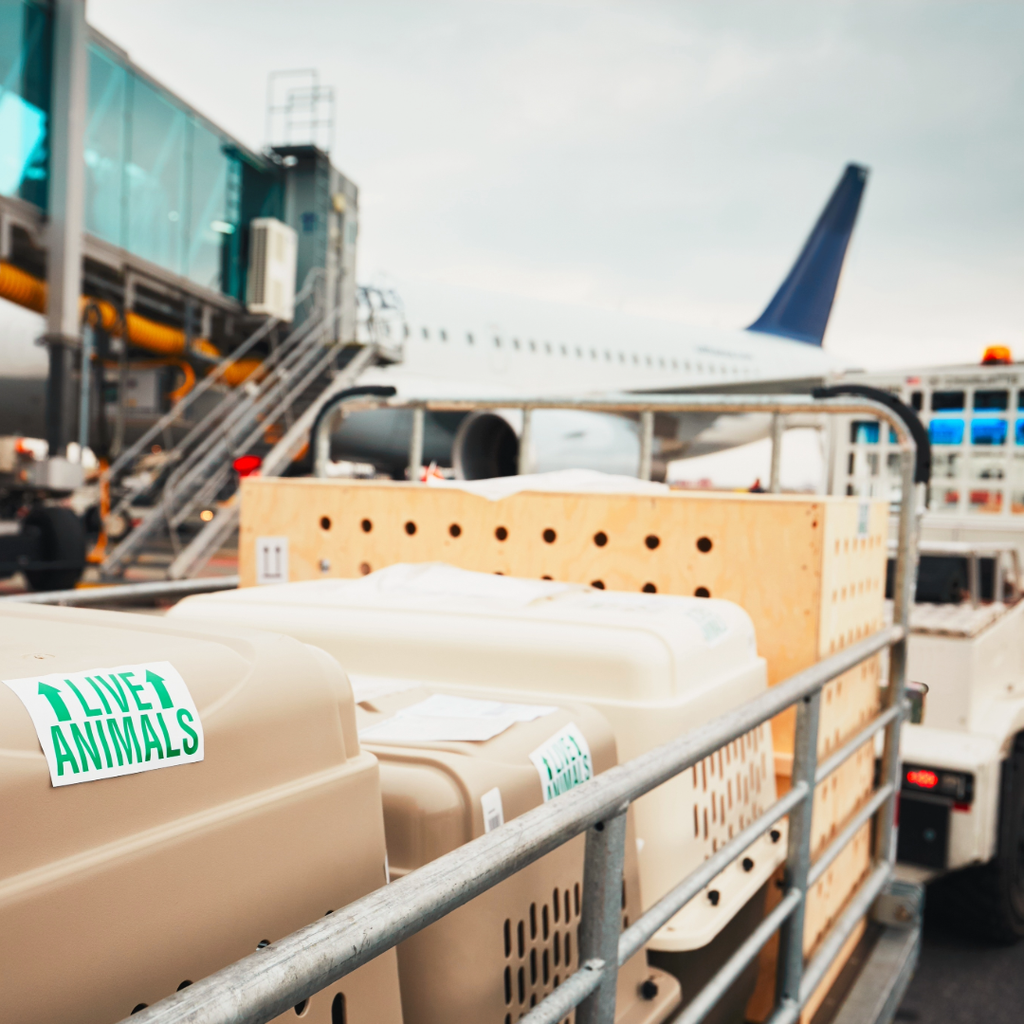
Your pet needs an IATA-approved travel crate that fits their size.
-
Age of pet (not under 12 weeks or over 12 years; may need a vet certificate to travel).
-
Brachycephalic dog breeds like pugs and bulldogs face strict airline rules or need a specialist.
-
If flying, select early or late flights to avoid extreme heat or cold during transit.
-
Vet Check before transporting; ensure Vaccination, parasite and heartworm treatment before travel.
-
No meal before travel. Make your pet's meal several hours before travelling, 5-6 hrs.
-
Do NOT use sedation unless under your vet's advice and supervision.
-
Request a quote for your pet's weight, size, and destination.
-
Ask how often road transport will stop for feeding & water, rest and overnight.