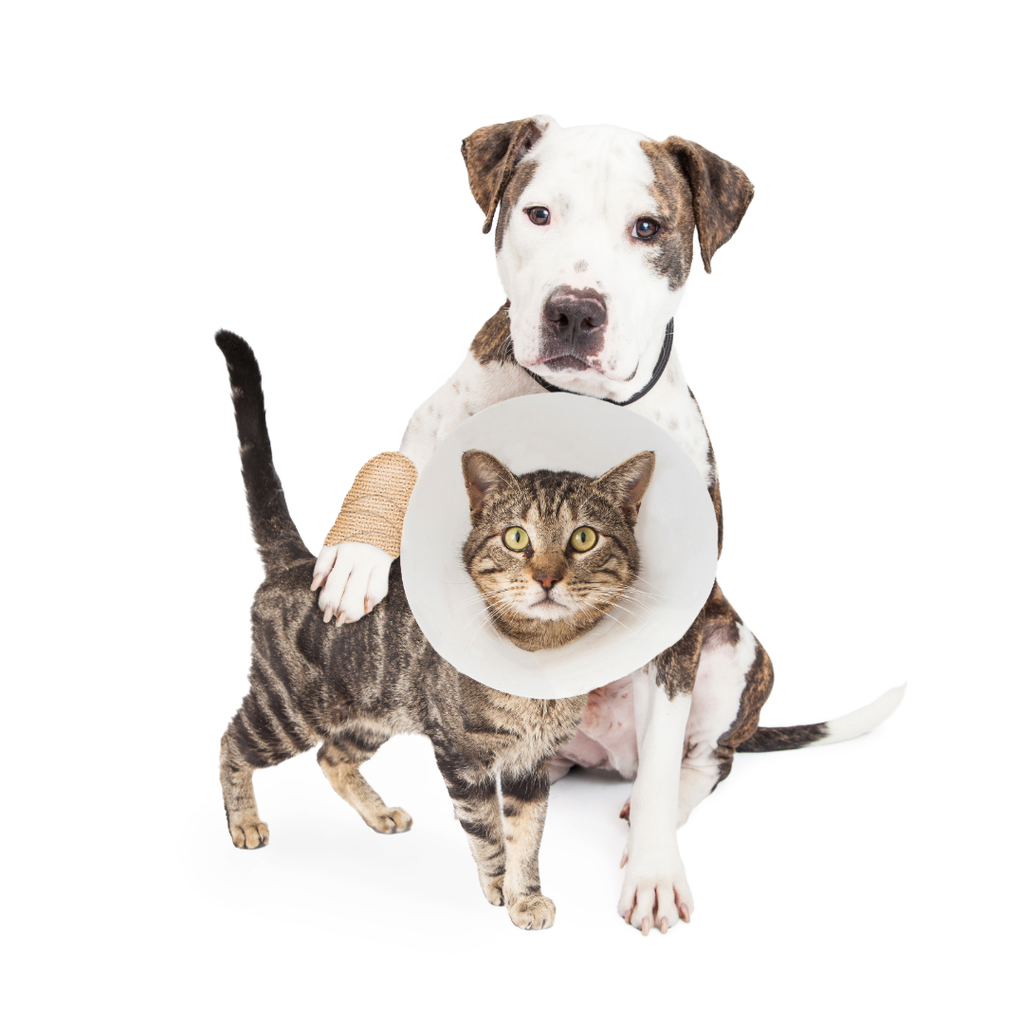
Desexing your pet is essential because it prevents serious health issues, stops unwanted behaviour, and reduces the number of homeless animals in shelters. It is one of the most responsible choices you can make as a pet owner.
How to stop the unwanted and abandoned litters: DESEX YOUR PET
What are the benefits to desexing?
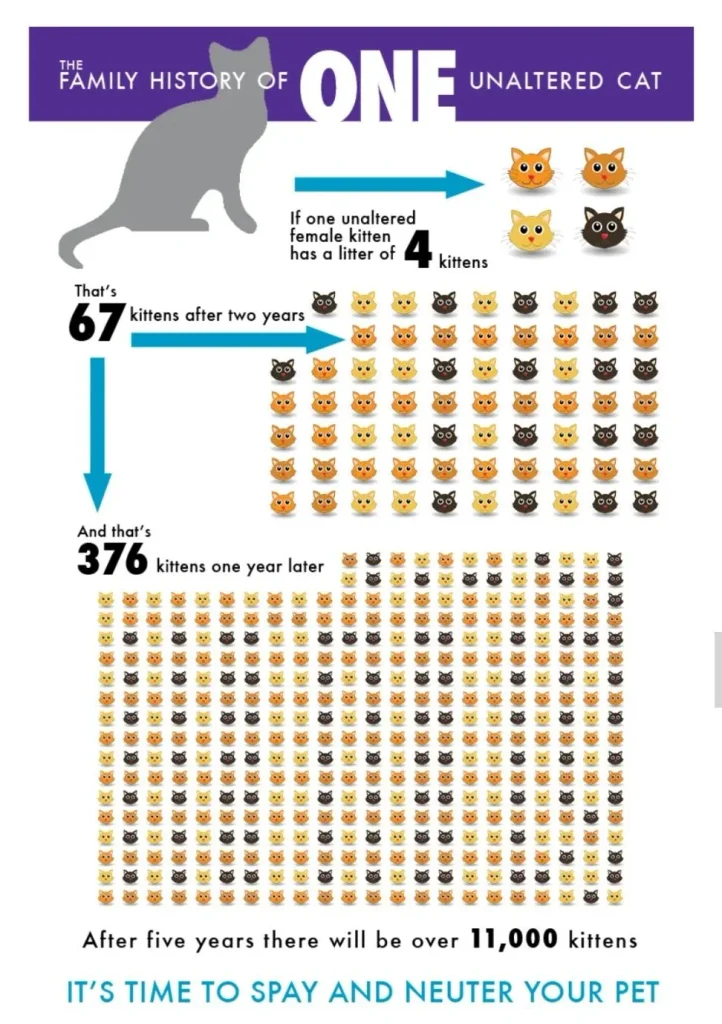
Cat: Desexing your cat stops unplanned litters (see diagram), lowers the risk of serious diseases like pyometra and certain cancers, reduces roaming and fighting, and stops unwanted behaviours such as urine spraying and loud yowling.
Dog: Desexing your dog prevents unwanted puppies, lowers the risk of serious health issues like uterine infections and testicular cancer, and improves behaviour by reducing roaming and aggression. Local councils also often reward this with lower registration fees.
In many states, you can avoid a penalty fee by desexing by a certain age, check each State or Territory legislation below for exact information pertaining to desexing and microchipping.
Why it Matters
Undesexed animals compound the strain on animal shelters and animal rescue through unplanned breeding, urban stray population cycles, and behavioural issues.
Kill Rates in YR2025/202 of animals for the RSPCA were 31% being nearly 4,000 animals
Kills Rates in YR2024/20025 in NSW Council Pounds were approximately 6,000 animals
Backyard and profit-driven breeders in Australia are currently facing a severe market collapse, leaving them unable to sell their litters and forcing many to abandon entire litters at local shelters; Animal Rescues are trying to assist by taking litters under a duty of care and rehoming abandoned litters of cats and dogs.
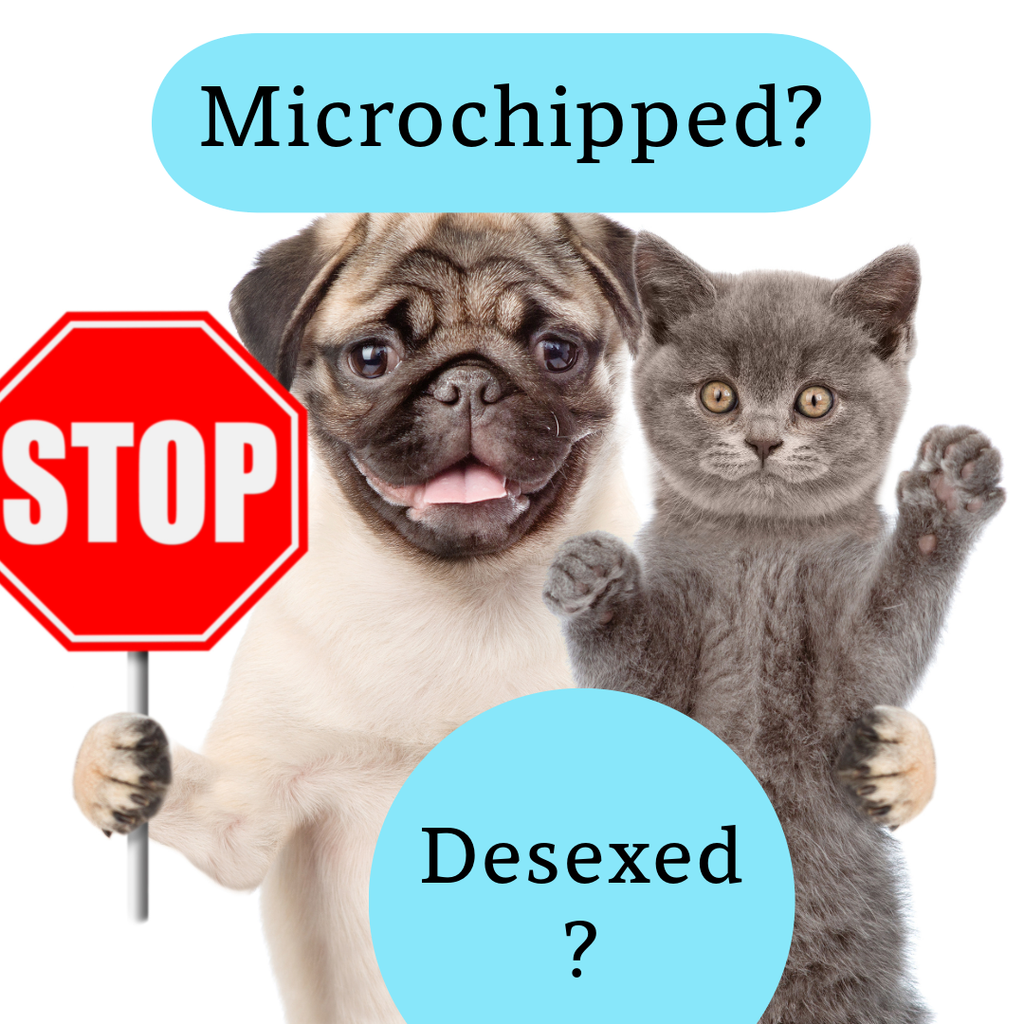
STOP: PetStar Australia – all pet profiles display a microchip number, and all pets are desexed.
Microchip Number
Desexed
Is your pet Microchipped and Desexed?
Dogs and cats must be microchipped before selling or rehoming.
NSW & ACT: Laws state microchipping of cats and dogs prior to sale/transfer and by 12 weeks of age. Display in all advertisements the Microchip Number and Breeder Identification Number, or Rehoming Organisation Number of the Approved Rehoming Organisation.
QLD & SA: Mandate microchipping prior to sale, and listings require valid breeder and microchip details linked to state registries.
VIC: All pet sale or giveaway advertisements must list the individual microchip number and a valid source number.
NT: It is compulsory to microchip and display the microchip number in advertisements if you are within the City of Darwin as part of the Council’s Animal Management By-Laws. Other local governments may introduce requirements to microchip cats and dogs, so please check with your local authority.
WA: Dogs must be microchipped by 3 months and cats by 6 months, and strictly before any sale or transfer of ownership. Transfer requirements: All cats and dogs must have a microchip implanted before being transferred or sold to a new owner.
TAS: Dogs must be microchipped by six months of age, and cats must be microchipped if sold or given away (or by four months of age). However, a microchip number is NOT required when advertising. If looking to adopt, check the microchip details with your Local Council and one of the Major Database Registries: Central Animal Records, Australasian Animal Registry (AAR), Global Micro Animal Registry, Petsafe Registry. (see Pet Registration).
Is your pet desexed?
Depending on which state or territory you live in, there are laws stating the cat or dog must be desexed by a certain age.
NSW: Current legislation requires all cats and dogs to be microchipped and registered and imposes heavy annual non-desexed permit fees for cats over 4 months and higher registration fees for intact dogs over 6 months of age, which indirectly heavily enforces desexing.
Cats must be desexed by 4 months of age. Dogs must be desexed by 6 months of age.
Both must be microchipped and registered prior to selling or giving away.
ACT: desexed dog by 6 months or cat by 3 months unless a breeding permit is held. Selling an undesexed animal without a permit is unlawful.
TAS: Under the Cat Management Act 2009, all cats over 4 months of age must be desexed before being transferred or sold, with minor exceptions. Dogs do not have a statewide mandatory desexing law.
WA: Under the Cat Act 2011, all cats must be desexed by 6 months of age, which includes before selling or transferring ownership. However, there is no statewide mandatory desexing law for dogs.
SA: Under the Dog and Cat Management Act 1995, all dogs and cats born after 1 July 2018 must be desexed by 6 months of age or within 28 days of a new owner taking possession (whichever is later), unless a specific exemption applies (such as ownership by a registered breeder). If you rehome an older animal that is not desexed, it is the owner's legal responsibility to have it done before transfer.
QLD: There is no legislation that mandates desexing before selling or giving away. Council differences: While most councils do not require private citizens to desex pets upon transfer, a small number of regional or local councils enforce strict localised mandates or require registration updates immediately upon a change of ownership. CONTACT YOUR LOCAL COUNCIL to check current legislation:
https://www.dlgwv.qld.gov.au/local-government/for-the-community/local-government-directory
NT: There is no legislation that mandates desexing before selling or giving away. Check your specific local council (such as the City of Darwin), as individual municipal rules might have unique registration requirements. Check on Northern Territory Government Animal Welfare.
Low Cost Desexing by the National Desexing Network (Australia)
Enter your SUBURB or POSTCODE ... https://ndn.org.au/desexing-directory/
Steps to Book:
- Choose your preferred vet from the low-cost desexing list.
- Watch for a confirmation email in your inbox.
- Call the vet directly to set up your appointment.
The National Desexing Network (NDN) is a nationwide referral system for discounted desexing made available to pet owners in financial need. Our goal is to end pet overpopulation by making this service more affordable to those who might not otherwise be in a position to desex their pets.
Australia has one of the highest rates of pet ownership in the world. Four out of five Australians have owned a pet at some time, and almost two-thirds of Australian households currently own pets. Despite these figures, many cats and dogs die every hour of every day in pounds and shelters nationwide. Due to the ongoing problem of pet overpopulation, particularly cats, due to the faster breeding rate, these healthy, loving animals are being killed because there are not enough homes available.
Established in 2004, NDN has three important programs:
- A nationwide network of more than around 160 participating veterinary clinics which to date has helped to desex around 250,000 cats and dogs nationwide.
- National Desexing Month, usually in July, when welfare organisations, veterinarians, pounds and councils are invited to participate by providing incentives and promoting desexing to encourage pet owners in their communities to desex their pets before the summer breeding season. NDN posts thought-provoking posters, flyers and social media banners to every vet clinic, Council and companion animal welfare organisation in Australia for display.
- Council Cooperative Desexing Programs in which Councils are encouraged to reduce intake into pounds and shelters and prevent roaming and unowned cats and dogs by contributing funding for desexing subsidies from their Animal Management budget. NDN runs these program free of charge to make it easy and cost-effective for Councils. See information on how the Cooperative Desexing Program works and the Benefits to Councils here .
NDN is a charity program funded by Animal Welfare League Queensland (AWLQ) and members of the public who strongly believe in desexing. The beneficiaries of the program are Australia’s cats and dogs.
AWLQ also runs the national G2Z Program which supports Councils and shelter and rescue organisations and runs G2Z Summits to End Companion Animal Overpopulation every 2 years to share effective strategies and promote unified action to reduce the numbers of animals euthanised in Australia.
The NDN concept is based on SPAY/USA, a well-established desexing network in the United States of America, which has facilitated hundreds of thousands of Desexing to help produce a significant drop in the numbers of pets euthanised annually. Source: https://ndn.org.au/
To Do List
- Keep your pet's Desexing and Vaccination Certificates, the Blue Book, in a safe place.
- Check the pet registry in your state/territory and Major Database Registries have you pet's desexing status up to date.
- Contact your Vet if the desexing status is NO and you've had your pet desexed. Remind your Vet to update the status.
To check the pet registration in your state or territory, go to ...
Are you thinking of rehoming your pet now it's desexed?
Let us help you rehome safely.
Adoption Application
Standardised questions about pet ownership and lifestyle help you to match your pet with a new owner and their family.
There are questions about energy level, pet size, outdoor shelter, vet and food options, family size, noise levels, whether there are any children, secure fencing, and how long the pet will be alone.
Send this Adoption Form to potential new owners before you have a meet-n-greet.
Get started → Adoption Form
Change of Ownership
A hard copy document can be signed by both parties and lodged with your local council in person, by post or via email.
OR you can transfer the Ownership online at the NSW Pet Registry by sending an Invitation to transfer to the new owner. You will need their email address linked to their account.
Other States & Territories, please go to Pet Registration.
Tips for Rehoming
- Does the ID address used by the potential new owner match the Adoption Application and the Change of Ownership form and their ID address?
- Do not meet alone, take a second person with you.
- Ask for their previous Vet's name to verify if they had an account.
- Ask them to bring their dogs and meet on neutral ground and meet in a park.
- Ask to meet the entire family that will be living with your pet.
- Ask for references.
- If there is anything of concern within the adoption application, ask more questions for clarification.
- Ask if you'll be able to receive updates about your pet; updates may be yearly after the first year.
- Does your pet match what the New Owner can offer? Vet care, training, good quality food, regular walks, playtime, lovely adventures, and safe indoor living, e.g. you want your dog to be able to sleep inside at night.
Bill of Sale
Agree on the adoption conditions beforehand, e.g., will there be a 14 day trial period, a Return Policy, a Refund Policy; whether the pet is sold 'desexed' or must be desexed within X weeks and what happens if the pet becomes sick within the first 72 hours, etc.
Safeguard your pet and yourself by having both parties sign a Bill of Sale and discuss the conditions beforehand.
Get started → Bill of Sale
Now you are ready to complete a Pet Profile [link]
The Pet Profile template is under construction.
CHECK LIST
Check the pet's registration information is correct and up to date.
Post a Pet Profile
Download a copy of the Vaccination History Book, and Desexing Certificate for the new owner. Keep a copy on file.
Prepare a Bill of Sale: what conditions of sale do you want to include: return policy, trial period, sick within 72 hours, refund policy, desexing policy, etc. Both receive a copy after signing.
Check new owners' ID information, name and location on all forms (Adoption, Bill of Sale and Change of Ownership forms). Do all 3 forms match the ID provided?
Did you call their previous Vet?
Did you receive photos or video of the new home, with fencing and gates?
Did you arrange to deliver the pet so a home check can be done at the same time?
Did the new owners agree to send you updates, including photos periodically?
Lodge the Change of Ownership form with your local council or Transfer Online via your pet registry. Check with your pet registry that the new owner has the pet linked to their account and received notification of ownership.
Notify the vet to release the medical history to the new owner via email.